
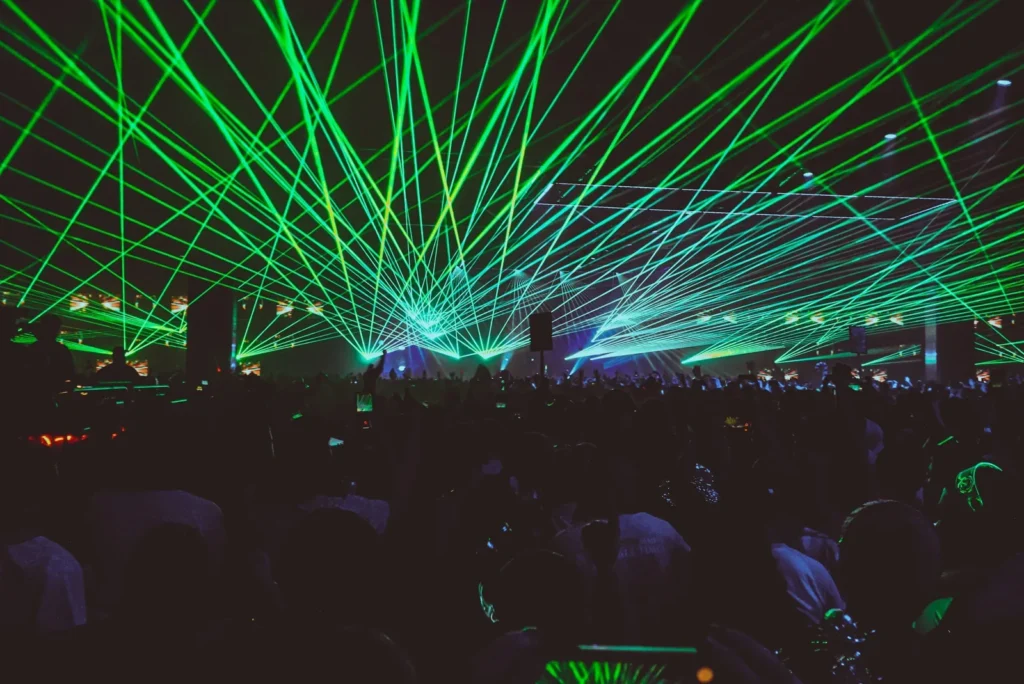
RAVE CULTURE · FIRST-TIMER’S GUIDE
What Is a Rave?
A First-Timer’s Guide to Rave Culture
A rave is a dance party where DJs play electronic music in long sets and the crowd dances for hours. It can be a club night that runs into the early morning, a warehouse party, an outdoor party in a field, or a festival with several stages.

Originally published August 3, 2023
In this guide
What is a rave, exactly?
A rave is a dance party built around DJs playing electronic music. It can be a club night that runs into the early morning, a warehouse party in a building nobody was meant to be in, or a festival with several stages that runs for days. The music is the point, the DJ sets are long, and the crowd dances for hours.
That is the meaning of the word. The rest of this guide is for the person who has a ticket, or a friend with one, and wants to know what happens inside, what kind of event they are walking into, where all of this came from, what PLUR means, and what to bring and wear the first time.
By Robert · Updated September 2026 · Sources checked on 15 September 2026
People use “rave” for two things at once. The old meaning is the party itself: a night of electronic music, usually in a place that is not a normal venue, put on by people who care more about the sound than the bar. The newer meaning is any event where the crowd came for DJs and dancing, which now includes ticketed festivals with a hundred acts and a merch tent.
Both are right, and room size has nothing to do with it. A concert has a band, a set list, and an end. A rave has DJs playing long sets that run into each other, so the night builds instead of peaking once.
| Event | What it is | How long | Who is on stage |
|---|---|---|---|
| Rave | A dance party built on electronic music, from a club to a warehouse to a field | A night, usually into the early morning | DJs, sometimes live electronic acts |
| Rave festival | Several stages, many DJs, often camping | One to several days | Dozens of DJs and producers |
| Club night | A regular venue with a dance floor and a DJ booth | Evening to closing time | Resident and guest DJs |
| Concert | One or two artists performing to a seated or standing audience | Two to three hours | A band or a headliner with a set list |
Rave
- What it is
- A dance party built on electronic music, from a club to a warehouse to a field
- How long
- A night, usually into the early morning
- Who is on stage
- DJs, sometimes live electronic acts
Rave festival
- What it is
- Several stages, many DJs, often camping
- How long
- One to several days
- Who is on stage
- Dozens of DJs and producers
Club night
- What it is
- A regular venue with a dance floor and a DJ booth
- How long
- Evening to closing time
- Who is on stage
- Resident and guest DJs
Concert
- What it is
- One or two artists performing to a seated or standing audience
- How long
- Two to three hours
- Who is on stage
- A band or a headliner with a set list
A “rave party” is the same thing as a rave. The two-word version is what people called the warehouse and field events of the early years, and it stuck around in searches and in the names of laws.
What actually happens at a rave
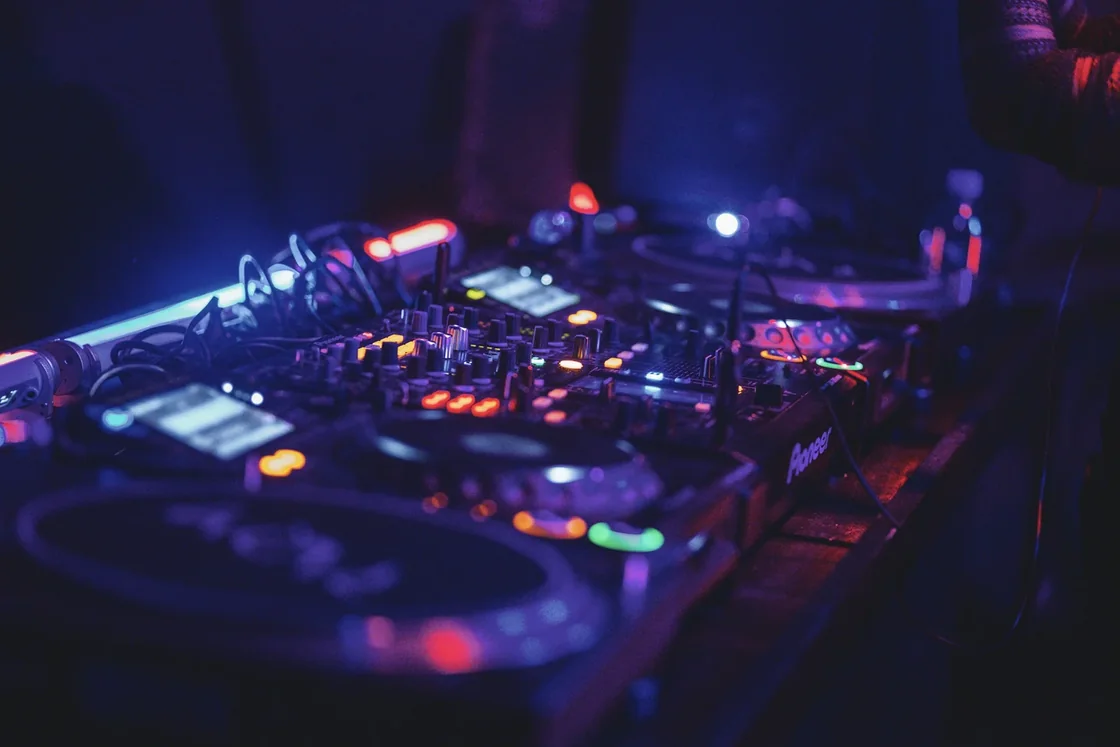
You arrive, get searched, get a wristband or a stamp, and walk into a room that is already loud. The early DJs are warming it up. Nobody is watching the stage yet; people are finding their friends, getting water, working out where the sound is best.
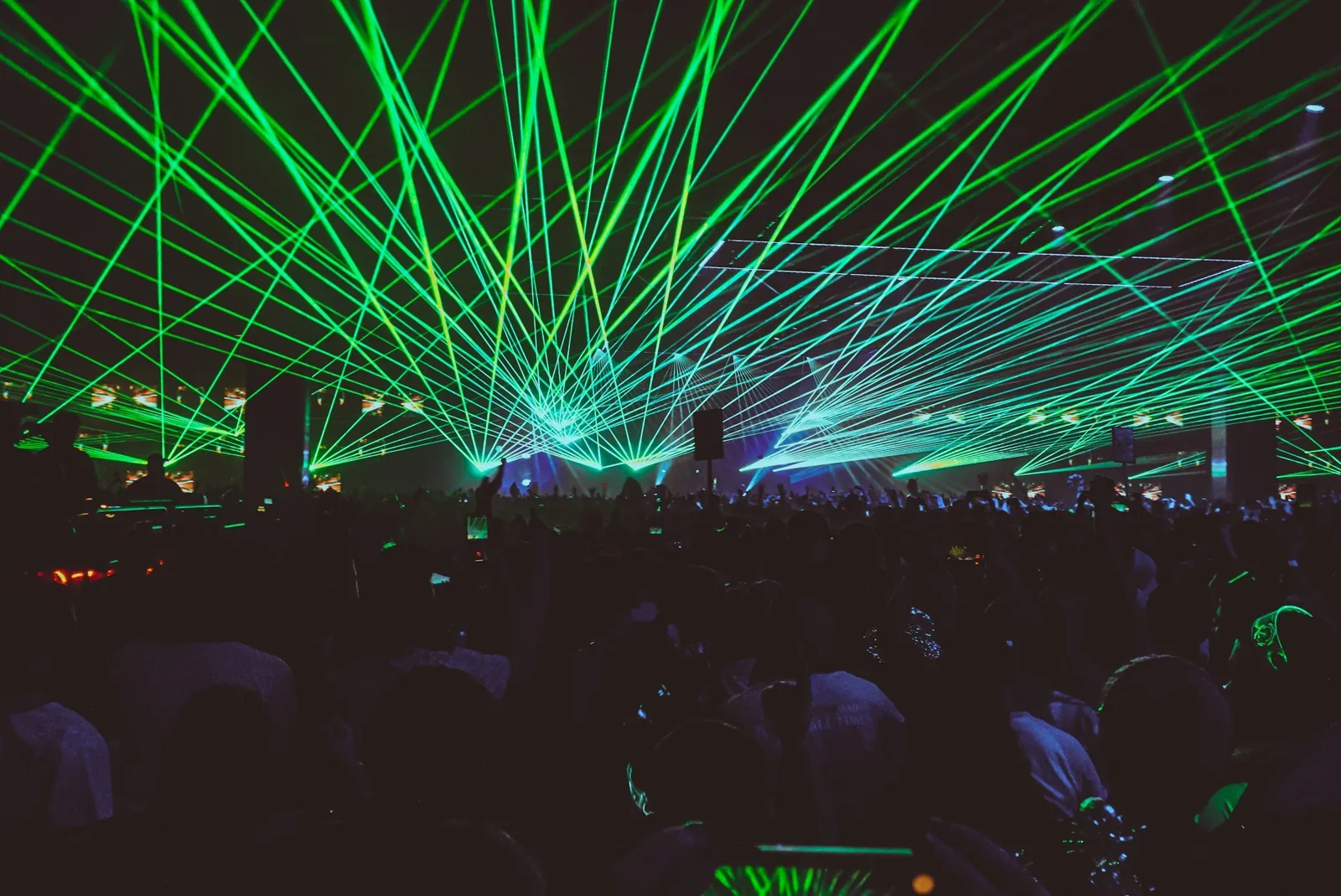
Then the night builds. Each DJ plays a long set, often an hour or more, and hands over to the next one without a break in the music. The crowd fills in, the lights get busier, and somewhere past midnight the headliner comes on, and the whole room moves at once. Lasers, screens, and strobes run with the music, so the peak of a track is something you see as well as hear.
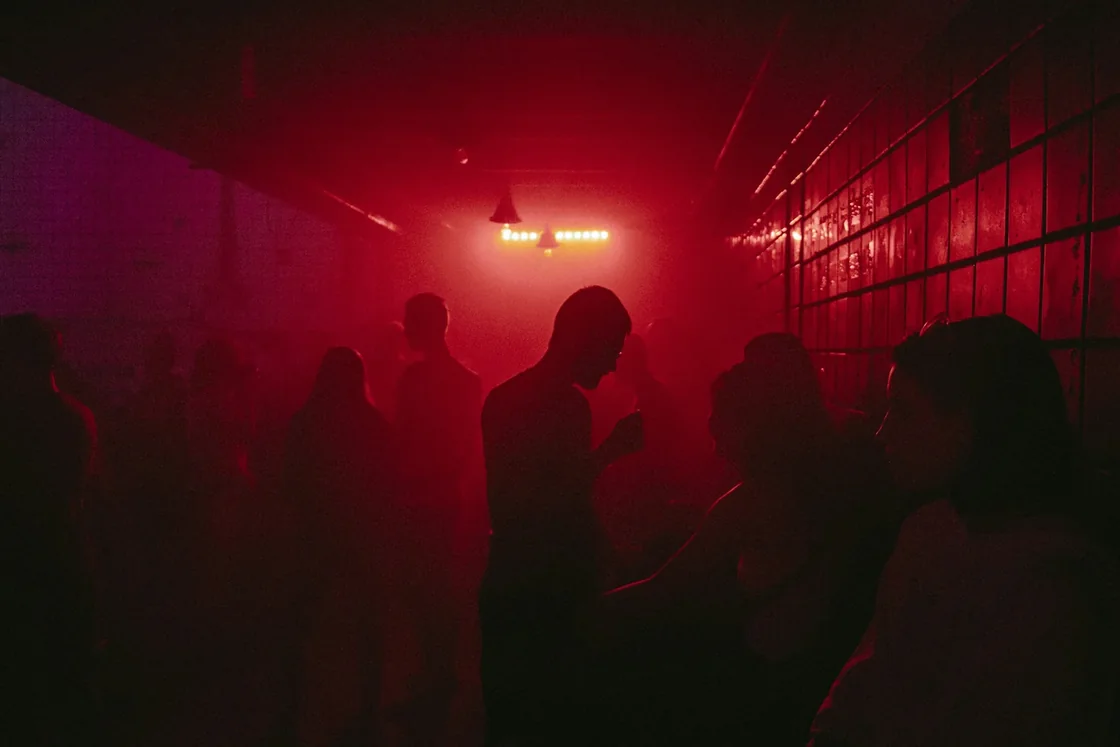
Around you, people are dancing in their own way, trading kandi bracelets, checking on a stranger who looks worn out, passing water around. You feel the bass in your ribs. It goes on long enough that pacing yourself matters.
How crazy does it get? Louder and later than anything else you go to. Not every rave is about drugs, whatever the reputation says; plenty of people go for the music and nothing else. The environment is intense, though, and raves are not for everyone. If you like being in a crowd that has agreed to dance until the sun comes up, you will be fine.
The kinds of raves
Five kinds cover most of what you will be invited to.
Club night
A licensed venue with a dance floor, a booth, and a closing time. The easiest first rave: you know where the exits are, there is a bar, and the DJ plays until the club shuts.
Warehouse party
The original form. A promoter rents or borrows an industrial space, brings in a sound system and lights, and only tells people where it is on the night. Some are fully licensed now; the draw is walking into a bare building that’s turned into a club.
Outdoor party
A field, a forest, a beach, a park. The sound carries differently, the sun comes up over the crowd, and the weather matters as much as the lineup.
Festival
Several stages, dozens of DJs, one to several days, often camping. Big production, official tickets, age limits set by the organizer. This is where most people go to their first rave today.
Day party or house party
A daytime event, a rooftop, a friend’s place with a proper sound system. Smaller, shorter, and a good way to find out whether the music is for you before you commit to a festival weekend.
Where raves came from
The music came first, in two American cities. House music grew out of Chicago in the early 1980s, shaped at a members’ club called The Warehouse, where Frankie Knuckles was the resident DJ from 1977 to 1982. Techno came out of Detroit in the mid-1980s, made by three high-school friends from Belleville, Michigan: Juan Atkins, Kevin Saunderson, and Derrick May. A 1988 UK compilation, Techno! The New Dance Sound of Detroit, gave the sound its name.
The word “rave” and the warehouse scene came from Britain. In the summer of 1987, a group of London DJs came back from Ibiza with acid house records and opened club nights around them: Shoom in London, and the sound spread to The Haçienda in Manchester. The two summers that followed, 1988 and 1989, are still called the Second Summer of Love. The clubs could not hold the crowds, so the parties moved into empty warehouses and fields around the M25 motorway, and by the end of the decade “rave” was the word for the whole scene.
It crossed back to America fast. A Brooklyn DJ named Frankie Bones played the British outdoor raves in 1989, came home, and started the Storm Rave parties. The first one was on 11 May 1991 in a brickyard in Flatbush, Brooklyn, for about 200 people. The scene grew from there on both coasts through the 1990s, and the genres widened with it: hardcore, jungle, drum and bass, trance.
The laws followed. In 1994, the UK passed an act that let police shut down open-air night gatherings playing music “wholly or predominantly characterised by the emission of a succession of repetitive beats”. In 2003, the United States passed the RAVE Act, which made venue owners and promoters liable for drug use on their premises. Both made unlicensed parties harder to run, and much of the scene moved into licensed venues and ticketed festivals, which is most of what a rave means today.
What is a raver, and what does PLUR mean?
A raver is anyone who goes, but the word carries an idea with it: PLUR, for peace, love, unity, and respect. It is the closest thing rave culture has to a rule book, and it has a real origin.
Frankie Bones told the story himself in a 2016 interview with Insomniac Magazine. On 4 July 1990, he and his brother painted “Peace Love and Unity” on a New York subway car; they called it the movement, PLUM. In 1993, at an outdoor party in a Bronx park, a fight broke out next to the DJ booth. Bones grabbed the mic and told the crowd that if they did not start showing some peace, love, and unity, he would break their faces. A raver on an early internet forum wrote it up with “respect” in place of “movement”, and that version stuck. Bones’ own line: “PLUR is the raver manifesto.”
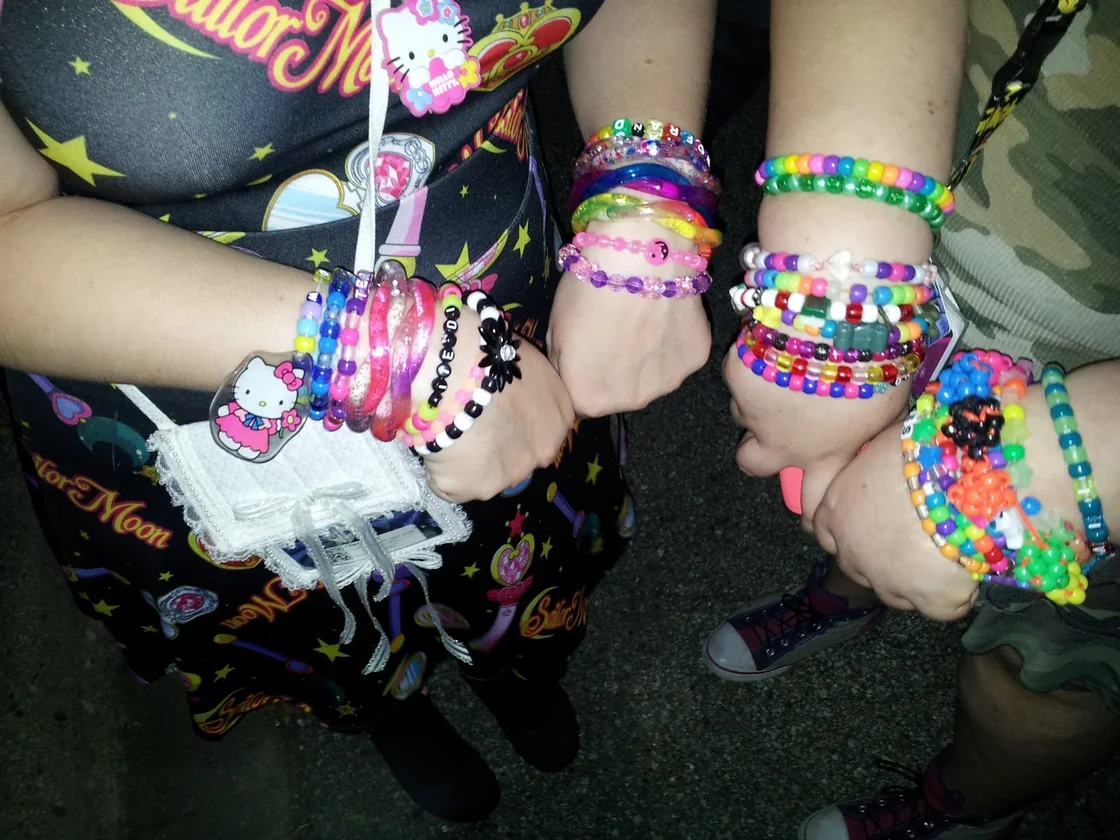
In practice, PLUR looks like this. You give people room to dance. Someone looks unwell, you check on them, even if you have never met. Drama stays outside. Kandi, the beaded bracelets ravers make and trade, change hands with a handshake that spells the four words out one by one, and giving one to a first-timer is the usual welcome.
Your first rave: the checklist
You will be on your feet, in a loud room, for longer than you think. Everything below follows from that.
Ticket and IDOn your phone and, if the event asks, printed. Age limits vary by event, so read the event page, not this guide.
WaterA bottle you can refill, or a hydration pack at a festival. Drink before you are thirsty.
EarplugsThe kind made for music, not foam. You will still hear everything, and you will hear it tomorrow too.
Shoes you have already worn inNew shoes on a dance floor are the most common first-rave mistake.
A small bag you can wearPhone, cards, earplugs, lip balm. Nothing you would cry about losing.
A layerRooms get hot, and fields get cold. A hoodie or a jacket you can tie around your waist.
SnacksDancing burns through dinner faster than you expect.
A meeting spotAgree on one before you go in. Phones die and signal drops in a crowd.
PaceThe headliner is late. Sit down, eat, drink water, and save something for the last hour.
The day afterIf you can, keep it free. A rave is a full night, and the good ones cost you the next morning.
For the longer version, the rave safety tips post covers hydration, the buddy system, and pacing in detail, and if you come home still wearing the band, here is how to loosen a festival wristband without cutting it.
What to wear to a rave
There is no dress code at a rave, which is why the outfits are the first thing you notice. Bright prints, mesh, jerseys, cloaks, bodysuits, glitter; the crowd dresses for the lights and for a long night of moving. The practical rules are the same for everyone: pieces that move with you, shoes that last, a layer you can carry, and nothing that needs fixing every time your arms go up.
Jerseys work for almost anyone. A rave baseball jersey buttons over whatever you have on, breathes, and carries an all-over print. The hockey jersey is the loose cut in the photos, the one people reach for when it is cold or when they want the whole crew in the same design.
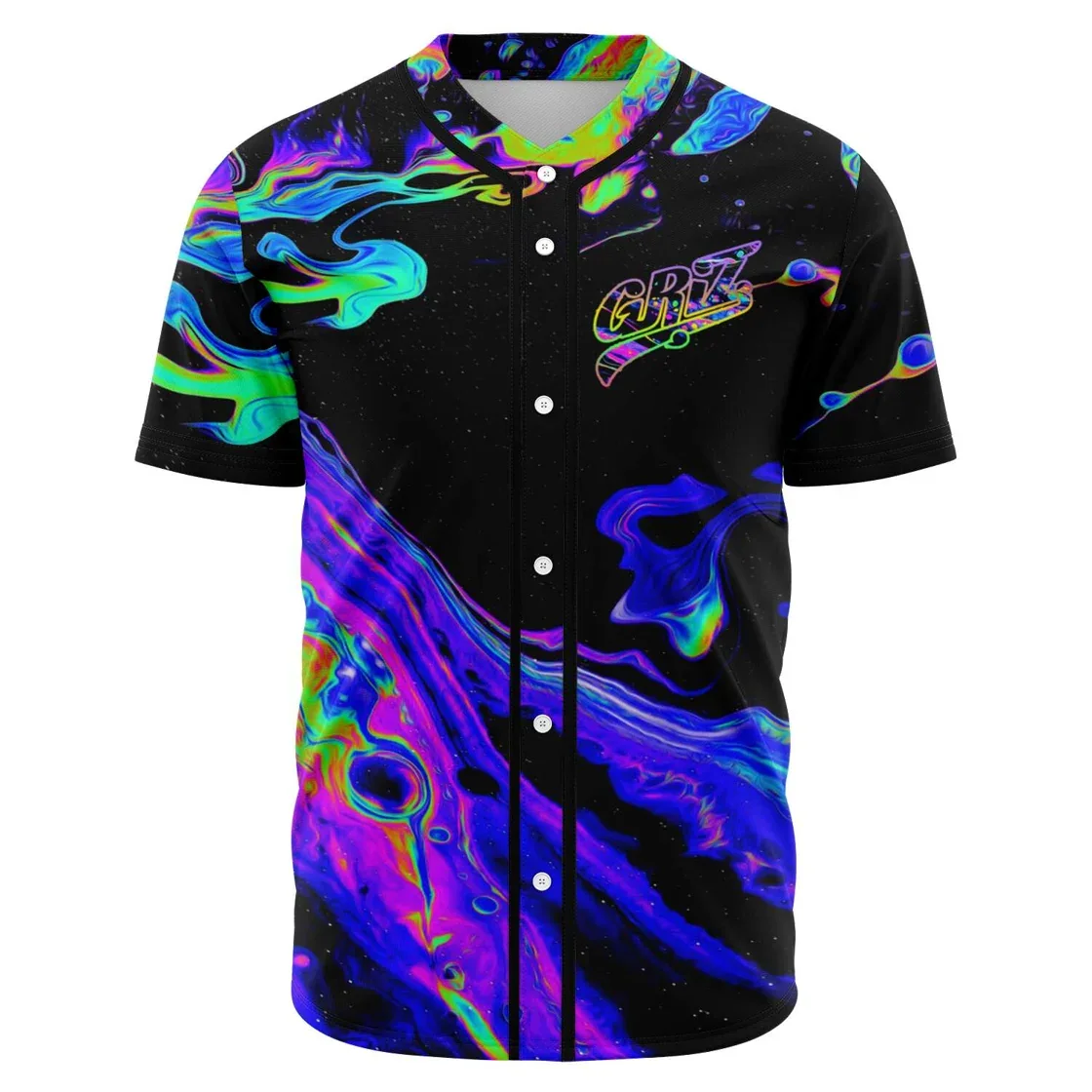
THE BASEBALL JERSEY
Black marbled psychedelic print
Rave baseball jersey · made to order, unisex XS to 5XL
Buttons over whatever you have on, breathes, carries the print.
Rave Bonfire store product image; not an on-model event photograph.
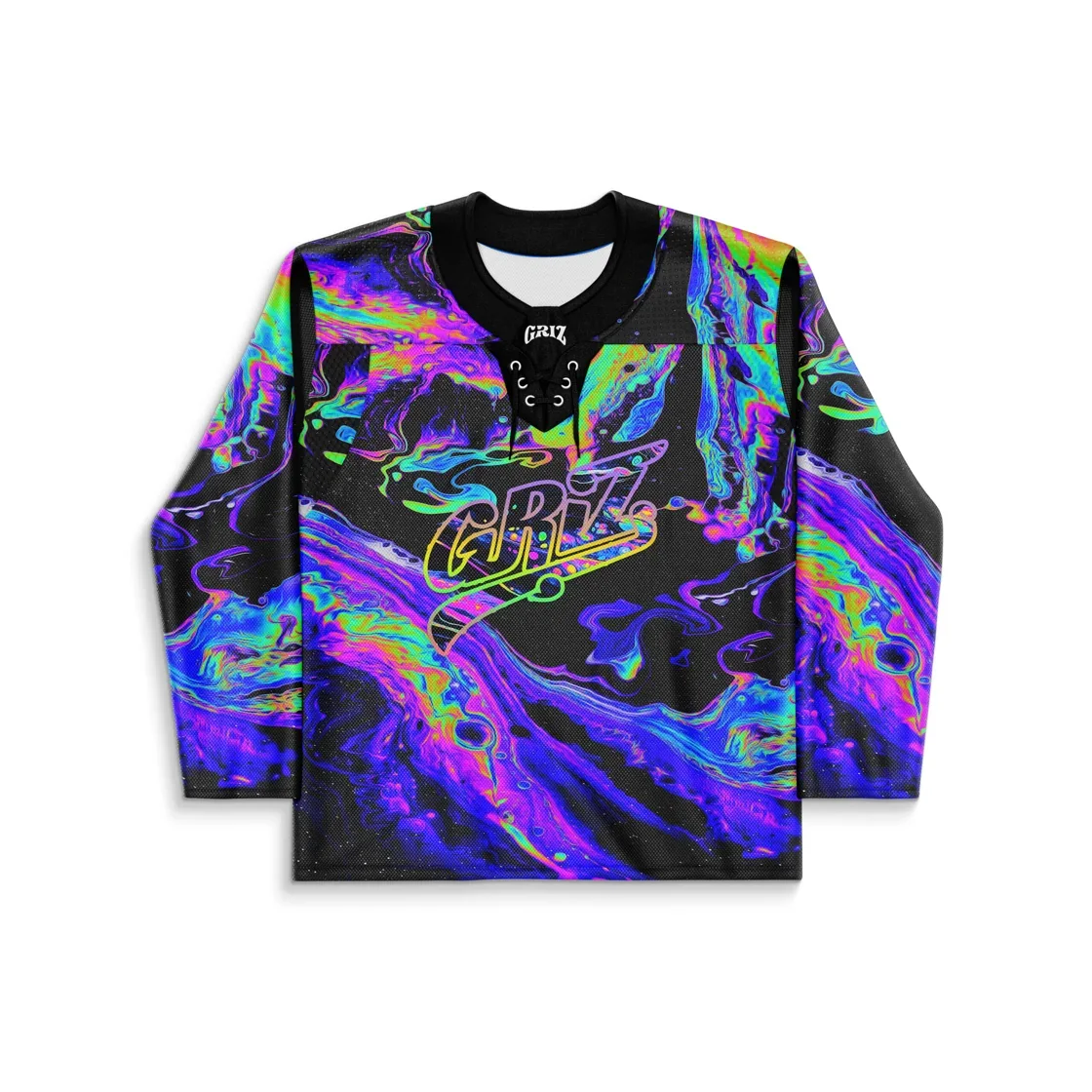
THE HOCKEY JERSEY
Neon oil-slick print
Rave hockey jersey · made to order, unisex XS to 5XL
The loose cut, for cold nights and matching crews.
Rave Bonfire store product image; not an on-model event photograph.
The baseball jersey in the photo is a black marbled psychedelic print, made to order in unisex sizes XS to 5XL. The hockey jersey in the second card carries a neon oil-slick print, also XS to 5XL. Both are in the rave jerseys collection. Designs named after artists on our site are Rave Bonfire fan art, not official artist merchandise.
For the full outfit, piece by piece and with sizes, read the women’s rave outfit guide or the guide for guys. And if your crew wants to match, the custom jerseys page is the way in: send us your idea, logo, reference image, or just the vibe, and see the full mockup before you pay.
FAQ
Is a rave the same as a festival?
A festival is one kind of rave: several stages, many DJs, one or more days, often camping. A rave can also be a single room for a single night. If the crowd came for DJs and dancing, it counts.
How long does a rave last?
A club night runs from the evening until closing time, usually in the early morning. Warehouse and outdoor parties often go until sunrise. Festivals run over one to several days, with each day ending late. Check the event page for its own hours.
What age do you have to be?
It depends on the event and the venue. In the United States, many raves and festivals are 18+, and some are 21+ because of the bar. The age limit is on the ticket page; read it before you buy.
Are raves safe?
Licensed events have security and medical staff, and the crowd itself looks out for people; that is what PLUR is for. The risks are the ordinary ones of a long, loud, hot night: dehydration, hearing damage, losing your friends. The checklist above covers them, and the safety tips post goes deeper.
What does “rave” stand for?
Nothing. It is an ordinary word that the acid house scene of the late 1980s adopted for its parties. The RAVE Act is different: a 2003 United States law whose name stands for Reducing Americans’ Vulnerability to Ecstasy.
Why are some rave parties illegal?
Because of where they happen. An event in an unlicensed building or an open field without permits breaks the same rules as any unlicensed gathering does, and both the UK and the US passed laws in the 1990s and 2000s aimed at exactly those parties. A ticketed event at a licensed venue is as legal as a concert.
Your first rave.
Dressed for it.
Everything in the photos is in the rave jerseys collection, made to order in unisex XS to 5XL. Want your own design or a matching set for the crew? Send us the idea and see the mockup before you pay.
The event photos in this guide are licensed photographs, credited under each image; the people in them are not Rave Bonfire customers and do not endorse Rave Bonfire. The jersey images are Rave Bonfire product photos. Designs named after artists are Rave Bonfire fan art, not official artist merchandise.
Rave Bonfire’s content team · Rave and festival life, explained plainly.
SOURCES
Wikipedia, “Rave”, “Second Summer of Love”, “House music”, “Detroit techno”, “PLUR”, “Criminal Justice and Public Order Act 1994”, “Illicit Drug Anti-Proliferation Act”; Insomniac Magazine, “Frankie Bones on the Origins of PLUR” (7 January 2016); Vice, “How Frankie Bones’ Storm Rave Birthed the PLUR Movement” (13 May 2015). All read on 15 September 2026.